At NASA Ames with AMA, I helped turn search-and-rescue mission needs into flight-ready multirotor hardware through rapid prototyping, avionics integration, wind-tunnel validation, and flight testing.
NASA Ames / AMA
Role
UAS Engineering Intern
Disciplines
Rapid Prototyping
Test & Evaluation
Avionics Integration
Duration
10 weeks
15+Wind-tunnel runs
03Vehicle iterations
01Confirmed controlled Black Hawk drop
01 / Mission
The problem
California Air National Guard search-and-rescue operations can require a crewed Black Hawk sortie to locate a single missing person. Committing a full-size helicopter to broad-area search consumes substantial flight hours, fuel, crew time, and operating cost while limiting how quickly multiple search zones can be covered. The engineering objective was a compact, helicopter-deployable UAS that could recover after release and ultimately conduct autonomous SAR searches.
02 / Ownership
The contribution
On the team’s downwash-tolerant, air-deployable bullet drone, I developed the autonomous post-release recovery and stabilization controller and built a Python flight-log analysis tool tailored to drop-test behavior and improvement metrics. I also integrated and revalidated avionics across three builds and supported wind-tunnel, structural, flight, and carrier-release testing.
03 / Evidence
The result
Delivered three integrated SAR multirotor prototypes; the first flight-ready vehicle was completed in four days.
Executed 15+ wind-tunnel runs across 18 wind-on hours and completed 10+ flight tests.
Completed three carrier-UAS releases from 30+ feet with successful recovery after every release.
Reduced redesigned-component mass by 20%+ while maintaining analyzed structural margins.
Demonstrated a controlled Black Hawk deployment architecture for future autonomous SAR missions.
04 / Contribution explorer
Explore the work.
Select a system to review its engineering record.
Control / Recovery
Recovering stable flight after an aerial release.
I developed and exercised the post-release recovery sequence in a PX4 software-in-the-loop workflow, using live telemetry to verify release detection, descent arrest, stabilization, and safe control handoff before flight testing.
SYS. 01 / WORKFLOW
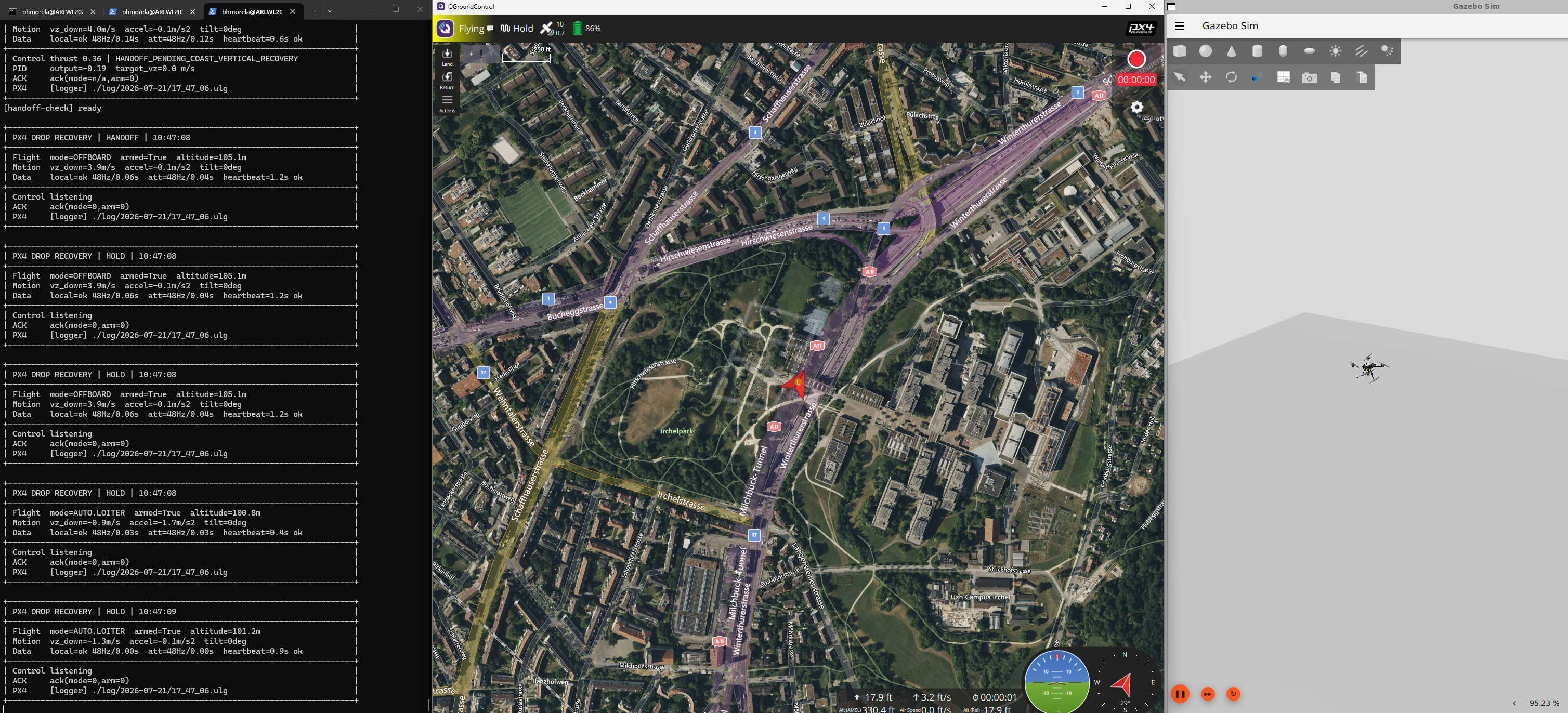
Integrated simulation workflow
QGroundControl handled vehicle commands and telemetry while Gazebo visualized the PX4 simulation. The live console exposed controller state, timing, and handoff behavior during repeatable recovery tests.
SYS. 01 / TELEMETRY
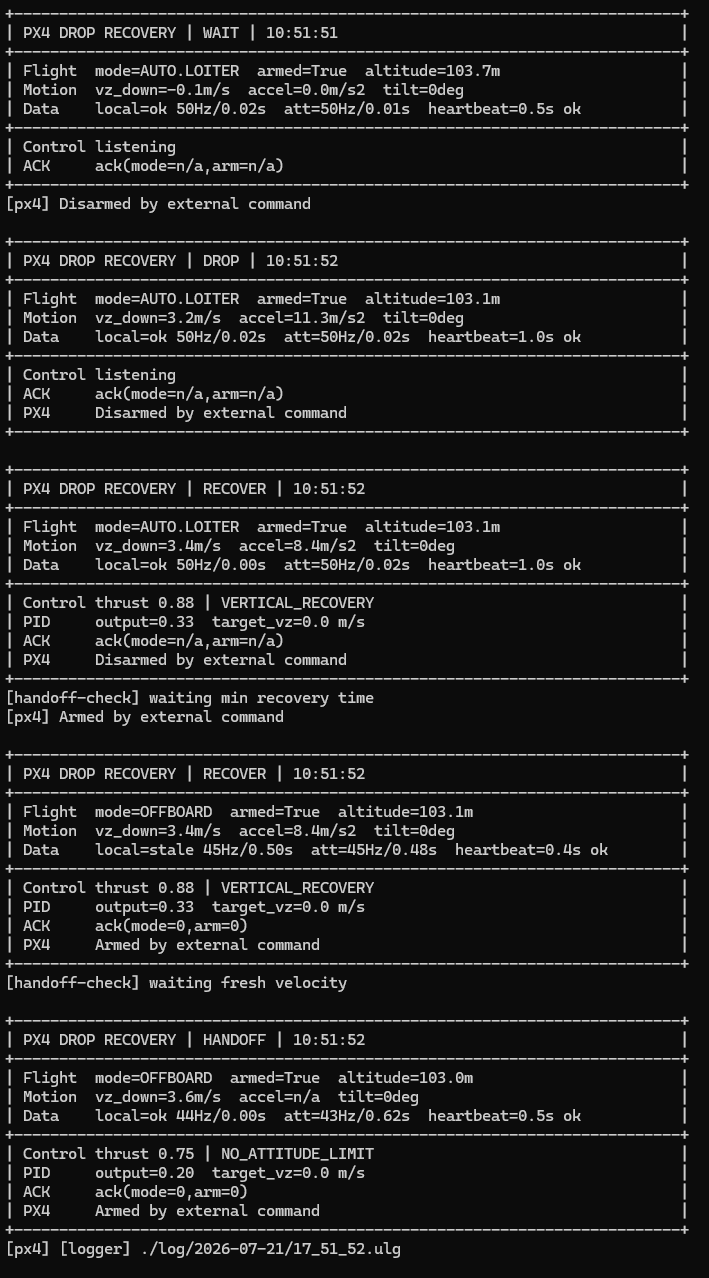
State-machine telemetry
Structured logs trace WAIT, DROP, RECOVER, and HANDOFF alongside vertical motion, attitude, data freshness, thrust output, and PX4 command acknowledgements.
SYS. 01 / ARCHITECTURE
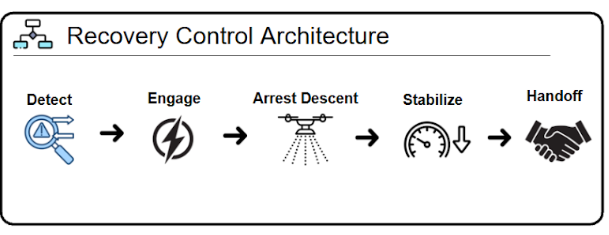
Recovery control architecture
The controller detects release, engages recovery, arrests descent, stabilizes the vehicle, and hands control back once recovery and telemetry checks are satisfied.
Test / Evidence
Using wind-tunnel and flight evidence to drive each revision.
I helped plan and execute the validation campaign, connecting wind-tunnel force and moment data, functional checks, and flight logs to specific structural, avionics, and control-system changes.
SYS. 02 / DROP CONFIGURATION
From captive carry to controlled release
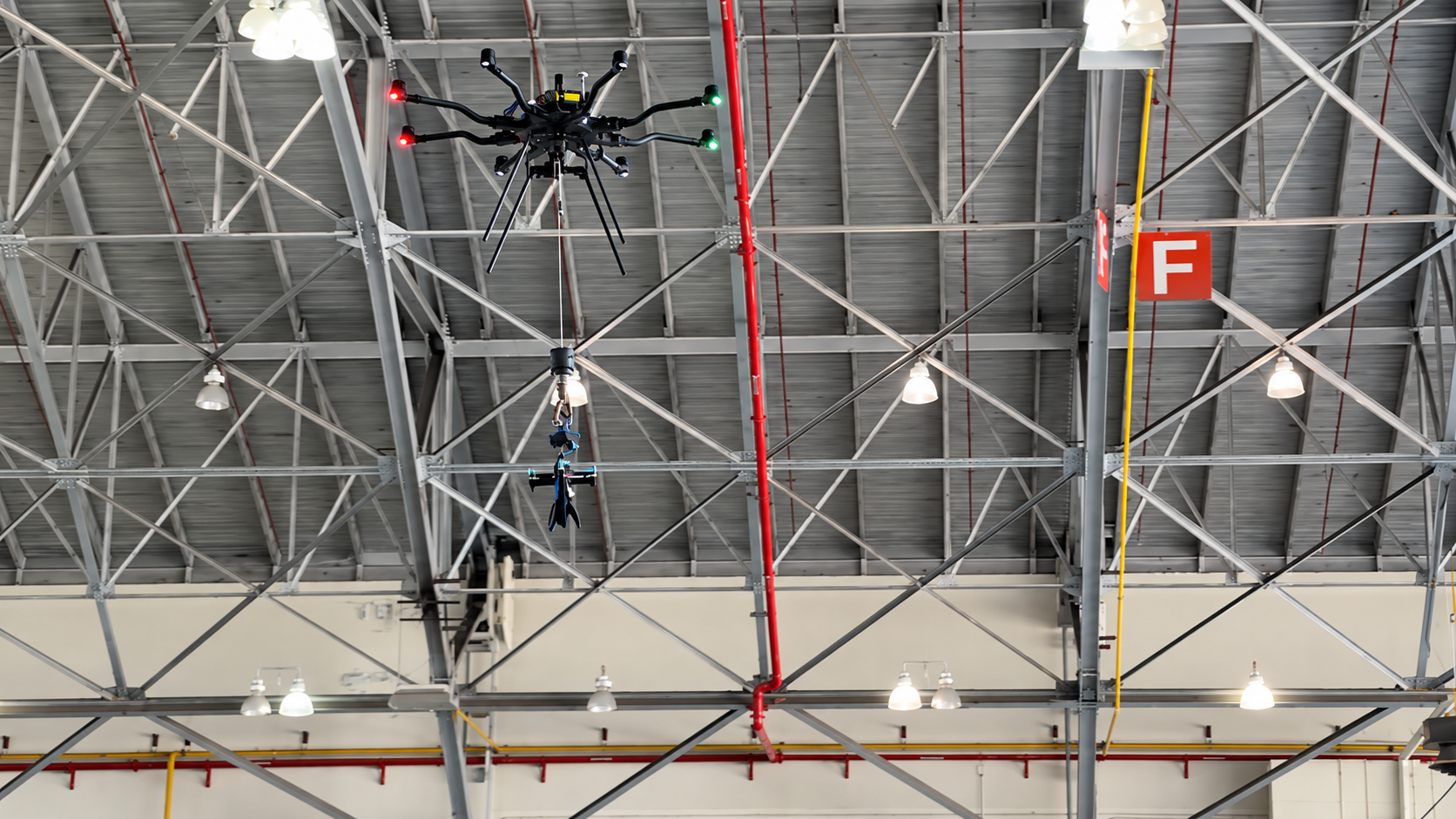
The indoor rig paired the carrier aircraft with the bullet drone and release hardware so we could check attachment, clearance, communications, and vehicle response before progressing to free-drop testing. These preliminary runs made the full deployment sequence observable and repeatable before increasing test risk.
SYS. 02 / TEST READINESS
Planning each sortie before flight
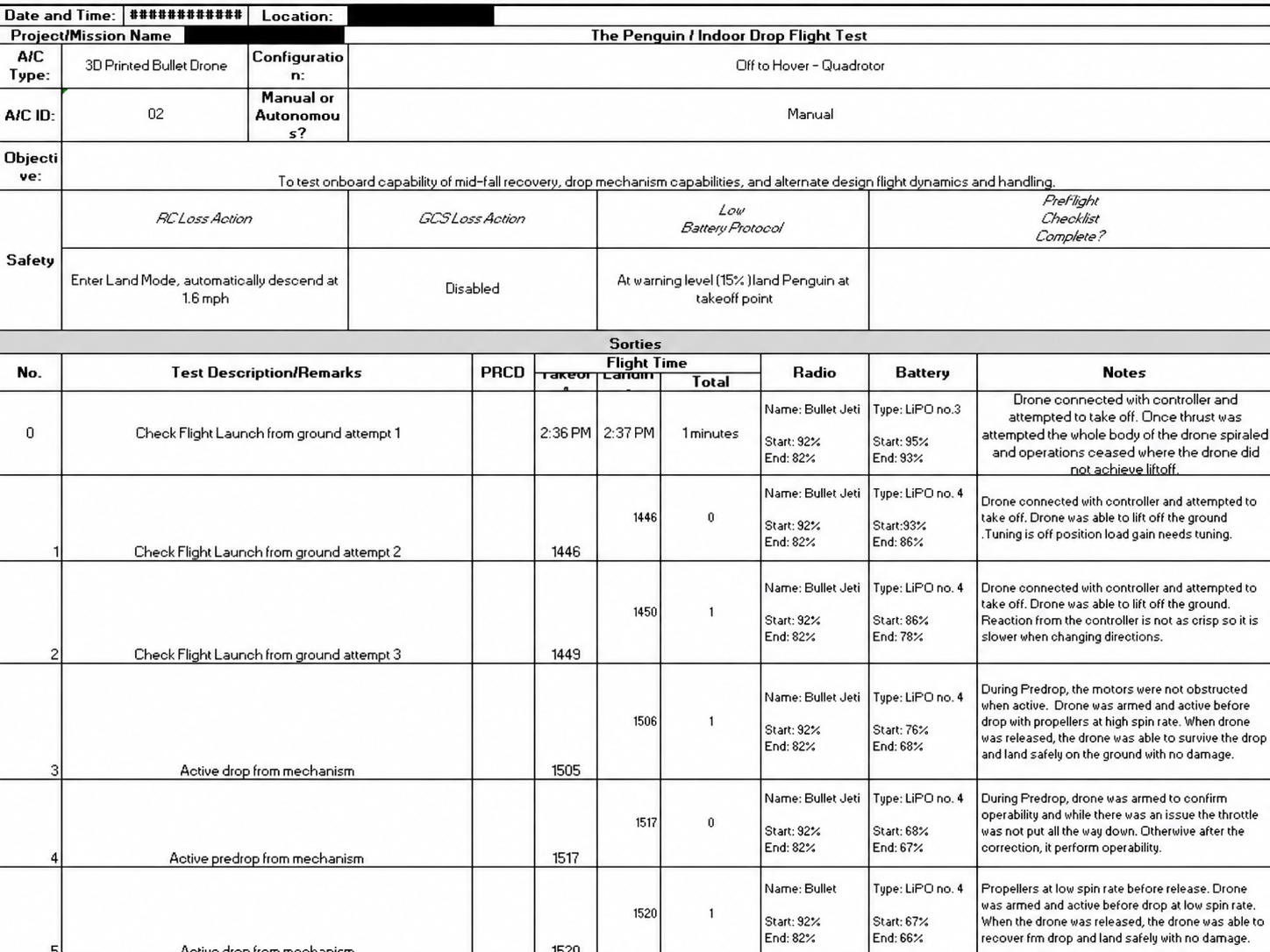
This test card is one example of how we prepared for flight and drop testing: defining the configuration and objective beforehand, reviewing safety responses and battery limits, then tracking sortie data and observations so the team understood what happened and what to change next.
SYS. 02 / FLIGHT OPERATIONS
Building flight-test judgment across platforms
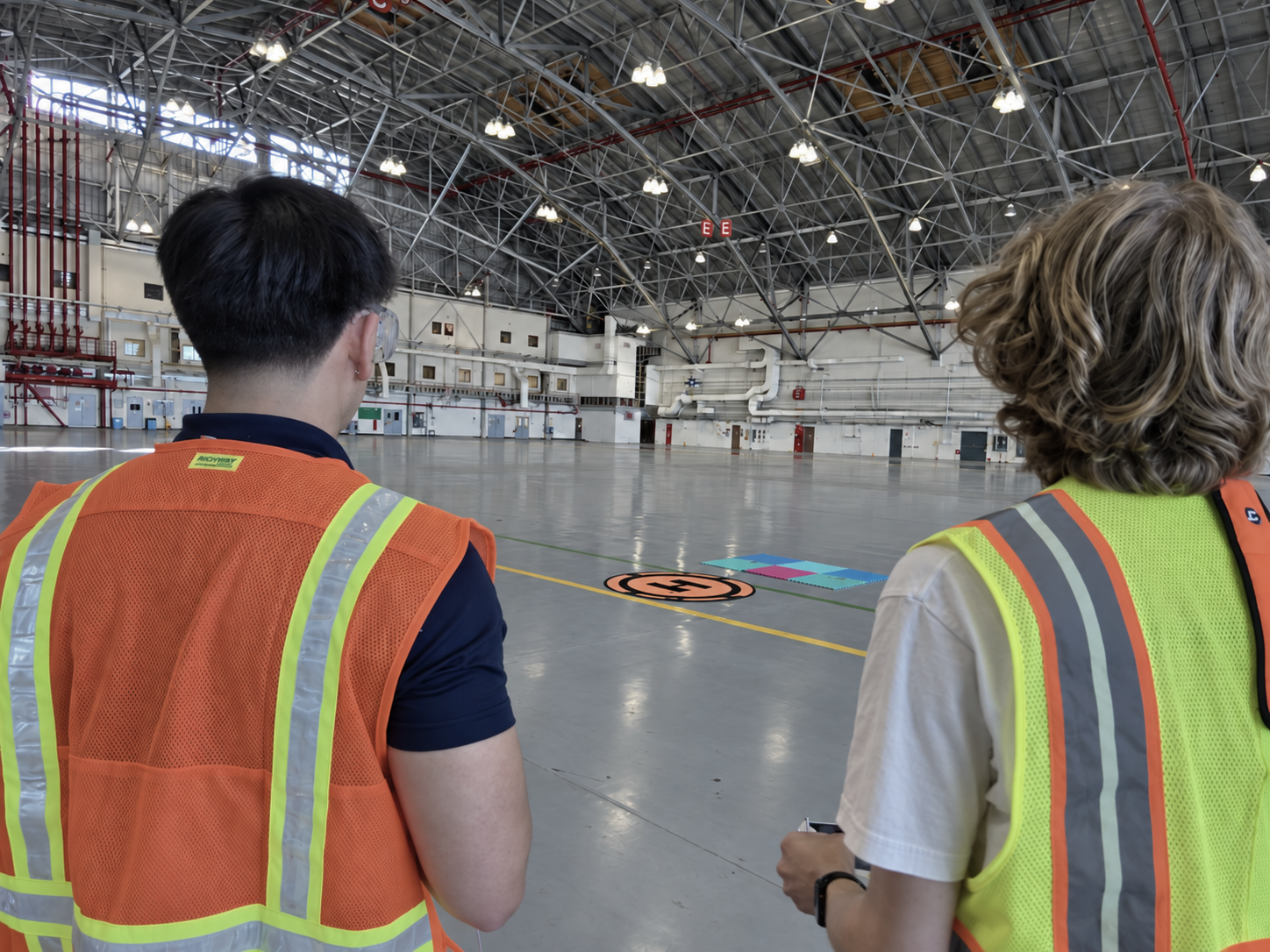
I piloted these tests to evaluate maneuverability, handling, and flight capability, gaining hands-on experience with observational flight testing and identifying off-nominal behavior while serving as the designated pilot.
Hardware / Iteration
Building flight-ready hardware for downwash and deployment loads.
I translated mission and test requirements into integrated vehicle hardware across three prototypes, supporting rapid fabrication, avionics commissioning, structural analysis, and redesign for the Black Hawk operating environment.
SYS. 03 / ASSEMBLY
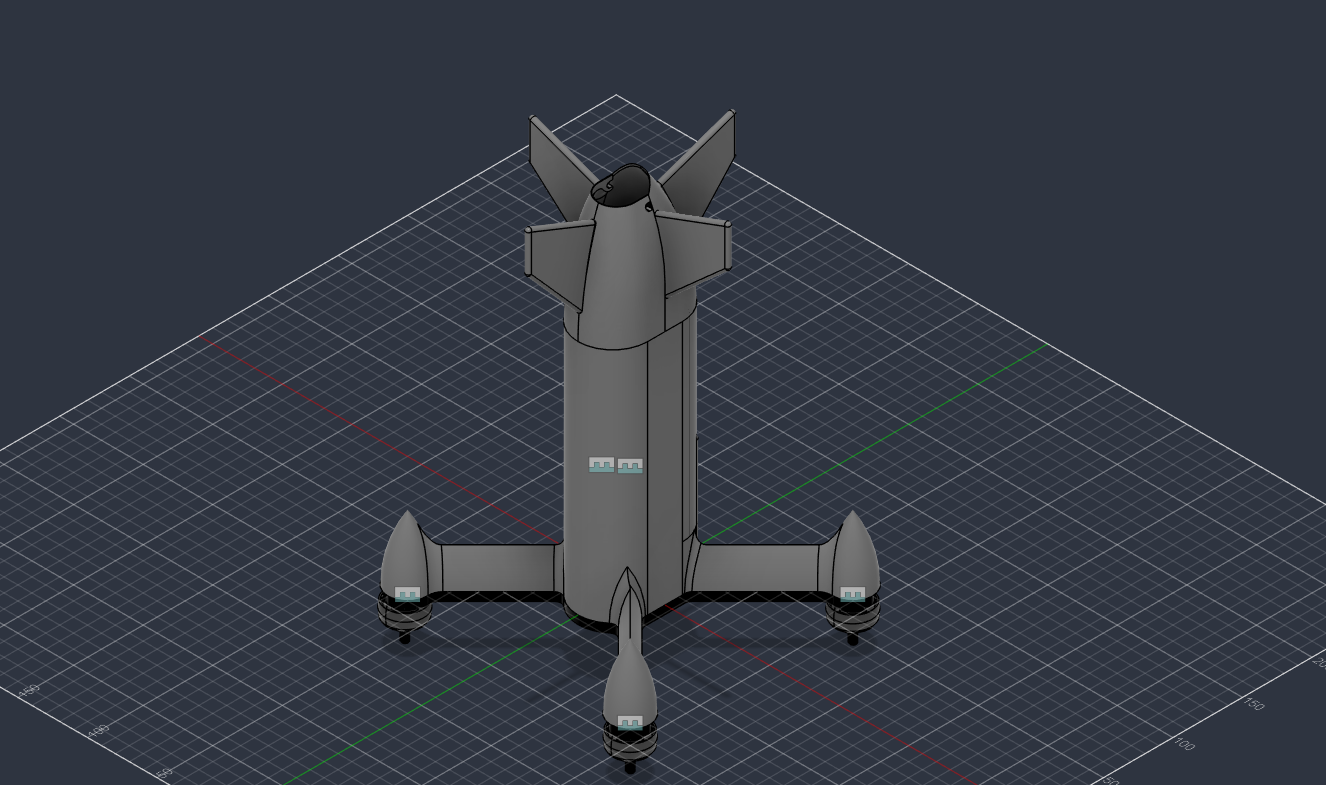
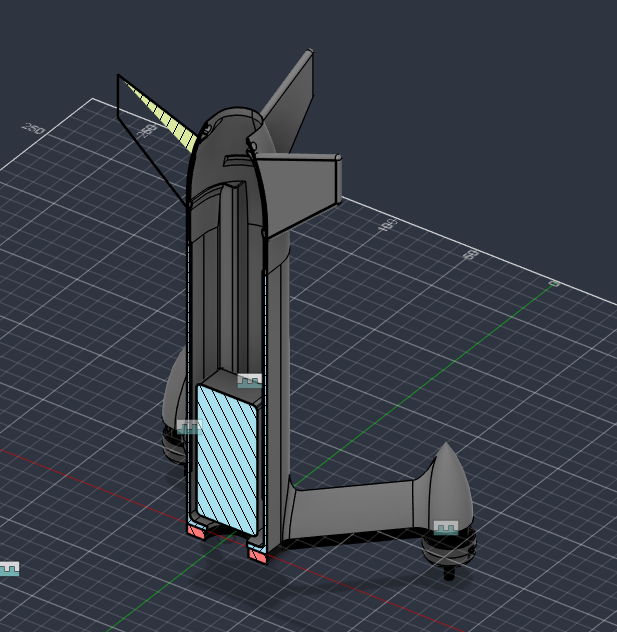
Air-deployable multirotor architecture
The integrated assembly packaged the propulsion arms, avionics bay, and stabilizing surfaces into a compact helicopter-deployable vehicle. The design advanced through three airframe iterations in three weeks, including a flight-ready hardware build completed in four days.
SYS. 03 / PACKAGING
Internal packaging and load path
The section view supported avionics-bay packaging, component access, and load-path reviews through the central body and propulsion mounts. That architecture carried into three fabricated 3D-printed airframes integrating nine flight-critical components.
2× design load / 20%+ mass reduction
SYS. 03 / FEA
Plate mass optimization under flight loads
Worst-case motor-thrust and rotor-wash cases were established with first-principles load calculations, then evaluated in FEA at 2× the maximum expected loading. The redesigned plate reduced component mass by over 20% while maintaining analyzed structural margins.
Software / Analysis
Turning each drop into an engineering comparison.
I created a Python analysis workflow tailored to the drop-test program, converting controller telemetry and flight logs into recovery behavior, stability, and iteration-to-iteration performance evidence.
SYS. 04 / REPORT
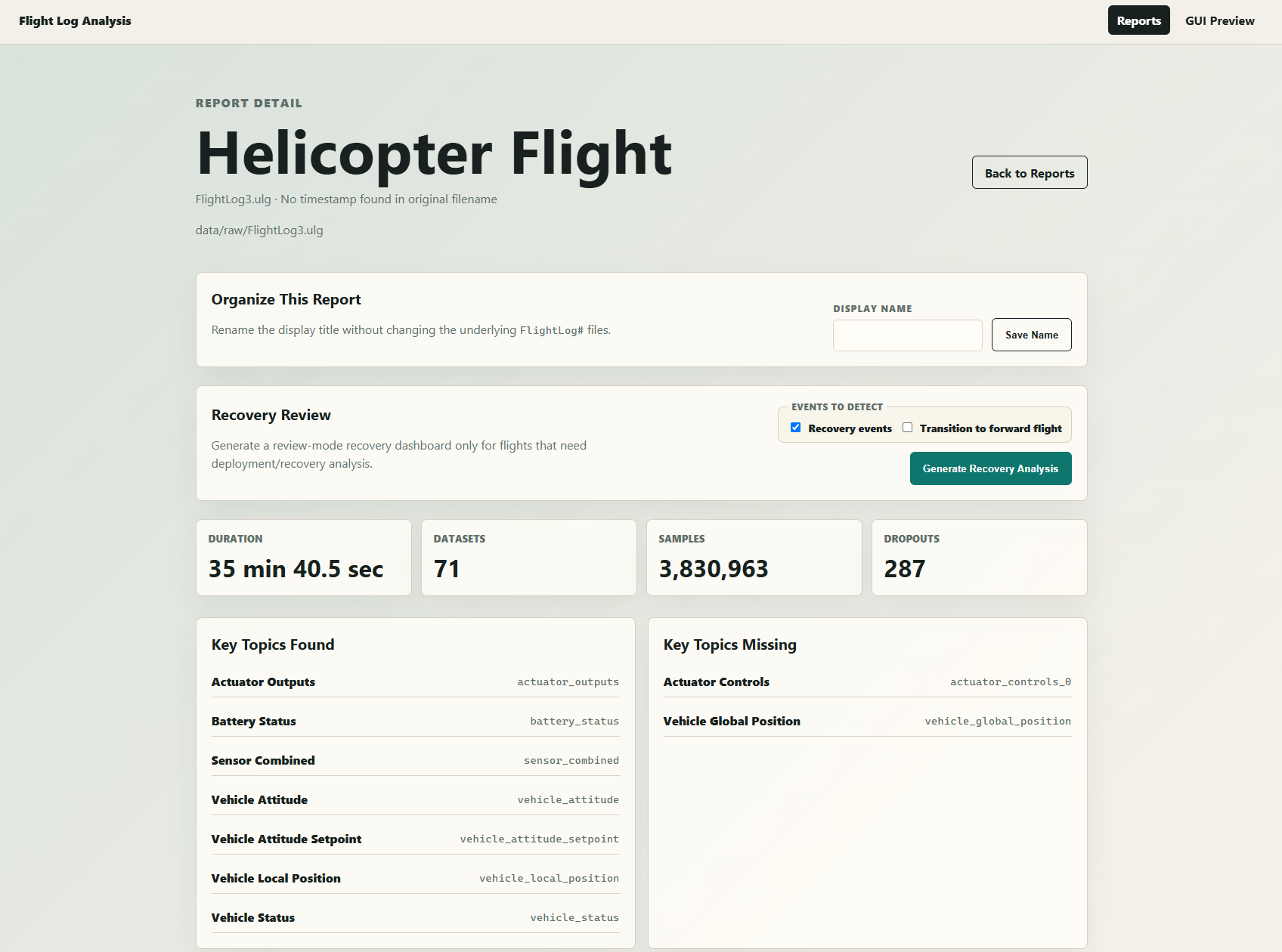
Helicopter-flight report at a glance
The Python workflow parsed a 35 min 40.5 sec flight into 71 datasets and 3,830,963 samples, surfaced 287 telemetry dropouts, and inventoried available and missing PX4 topics before recovery review.
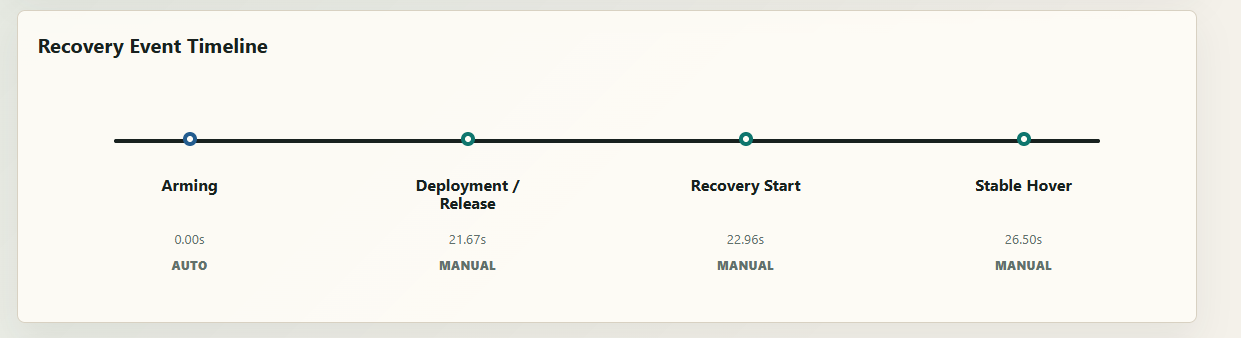
SYS. 04 / EVENTS
Detected recovery sequence
Event detection aligned deployment, recovery start, and stable hover on one review timeline—showing 1.29 seconds from release to recovery and 4.83 seconds from release to stable hover.
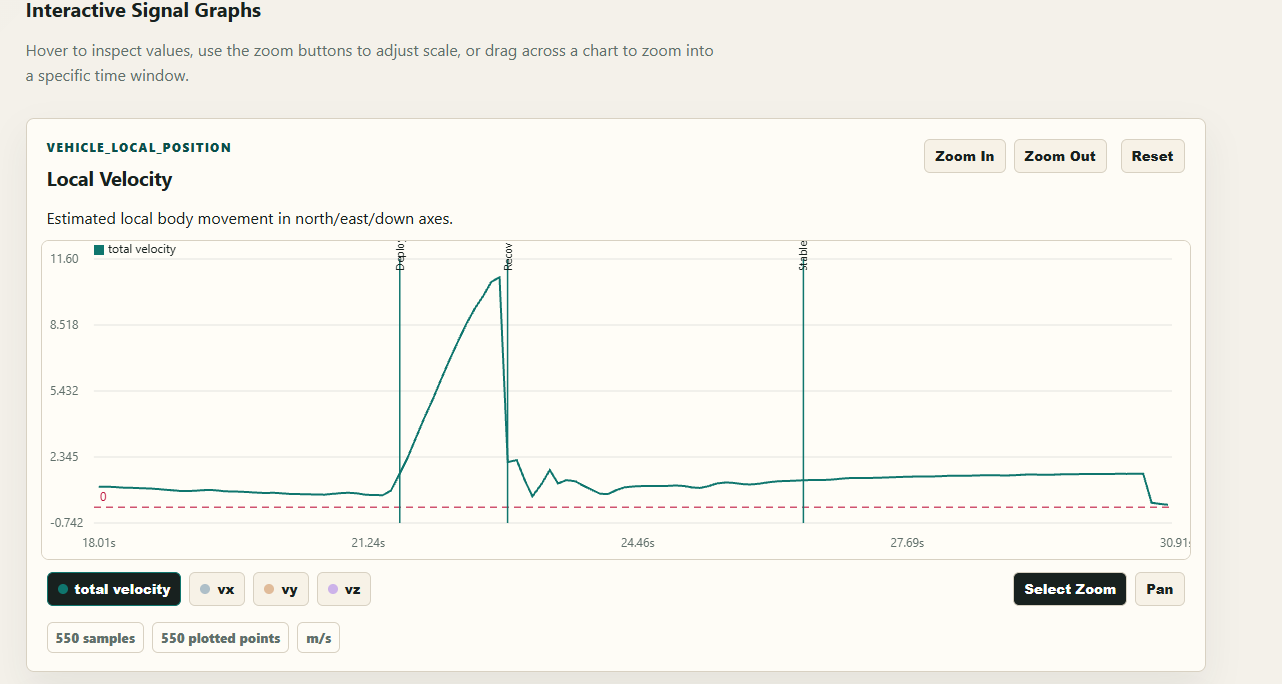
SYS. 04 / RECOVERY
Recovery window with event markers
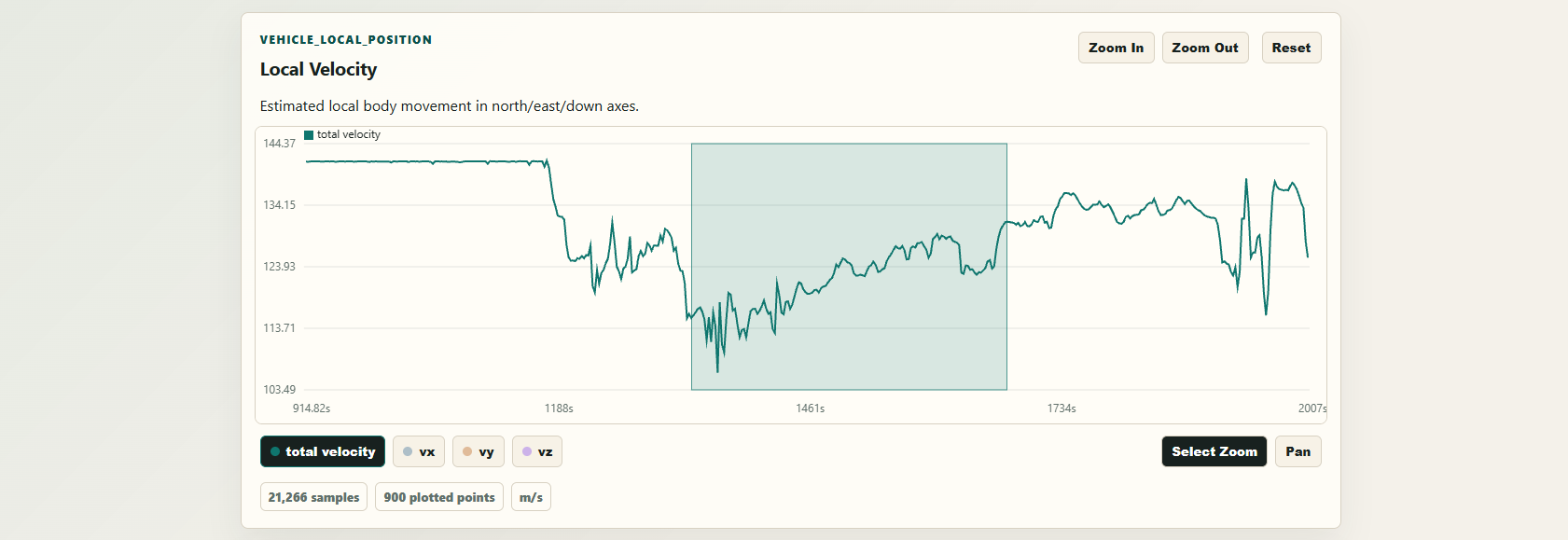
A focused 550-sample recovery window overlays Drop, Recovery, and Stable markers on total local velocity, making descent arrest and post-release settling visible without searching the raw log.
SYS. 04 / SCALE
High-volume log navigation
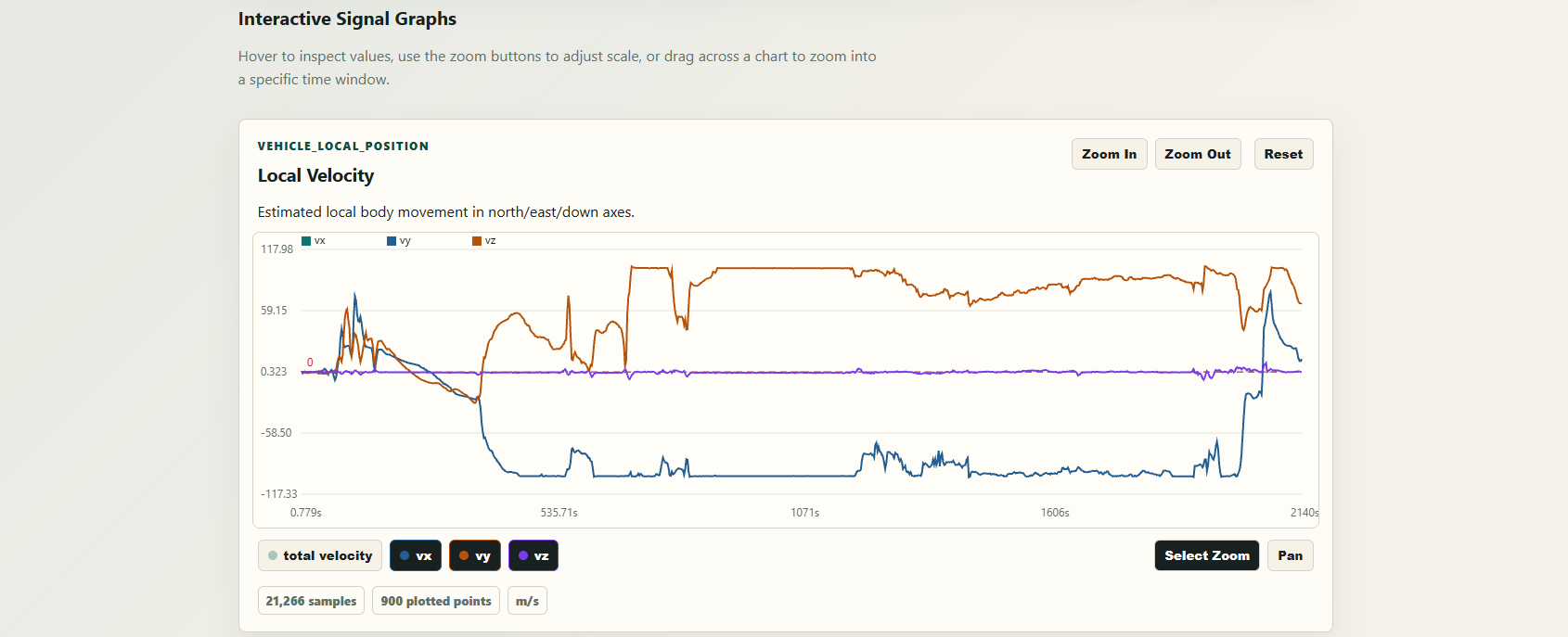
The interface reduces 21,266 samples to 900 plotted points for responsive review while retaining draggable zoom and pan controls for high-detail time windows.
SYS. 04 / SIGNALS
Axis-level motion decomposition
Selectable total velocity and x-, y-, and z-axis traces isolate the direction driving a transient, supporting controller debugging and comparison between test events.